
Chapter in Halo-Halo Ecologies
The “Undocumented” Foodscape: Food (In)security, Disaster, and the shifting ecologies in an urban informal settlement in Manila.
Maria Carinnes Alejandria, PhD
The concept of foodscape has been used to define the social systems that determine the processes of creating and accessing foods. Key to this frame is an exploration of the intersection between communities and their environment which impact the meanings and preferences associated with foods. This paper discourses on the role of urban housing crisis on the development of localized distinctions on valuable and non-valuable foods. Drawing from ethnographic data among informal settlers in an urban coastal area in the city of Manila, this work locates how the concept of food security is redefined in a community that has been subjected to varying forms of environmental vulnerability as a byproduct of their undocumented status. More specifically, I elaborate on their forms of negotiations in terms of 1) food source turfing, 2) valuation of food for trading, and 3) development of food sharing networks as strategies to address household food insecurity. This study also interrogates the role of the shifting environment of the community in determining the types of food that are considered socially acceptable. From garbage piles along the shoreline where tirtir (recycled leftover food) are collected to the polluted estuary joining Pasig River and Manila Bay where seafood is harvested, the extent of food security of a household is dependent on periods of flooding that could redefine the community’s foodscape. The findings of this query contribute to a nuanced understanding of food as it considers the socio-ecological contexts of the people who consume these. This paper concludes with a critical note on the role of urban development planning in the redefinition of food access and utilization among vulnerable sectors which underpins the widening disparity in health equity.
Chapter in “Fluid Phenomena: The River and Anthropocene Life-World in the Asia-Pacific” Brill Publishing
Navigating the Blame: An urban ethnography of a riverine village in Manila, Philippines
Maria Carinnes P. Alejandria, PhD
Disjointed urban governance generated gaps in housing management that resulted in an increase in informal residences built in hazard-prone environments, such as settlements along the Pasig River. With a 25.2 km in length that connects two main bodies of water–Laguna de Bay and Manila Bay—Pasig River–is a key source of water transportation and foodscapes for urban dwellers from the Philippines’ National Capital Region. In 2021, the river was identified as the “world’s most polluting river for plastic waste,” citing the volume of plastic it brings to the ocean annually. Public and state responses to river-related pollution issues have been centered on blaming informal settlers living along the river, which translated into policies on dispossession and securitized surveillance. This study documents the narratives of residents of a riverine village in Manila as they negotiate their right to residency vis-a-vis the pervading threats of natural hazards and the constant blame ascribed to them for river pollution. Lifting from a 7-year ethnographic work, this paper presents analytical themes on dispossession, gendered hazard, resource management, and the local moral economy drawn from the shared identity of being residents in the urban periphery. This paper concludes with a critique of urban governance that precludes sectors of society from unjust tropes of development.
Keywords: Riverine community, pollution, urban governance, informal settlement
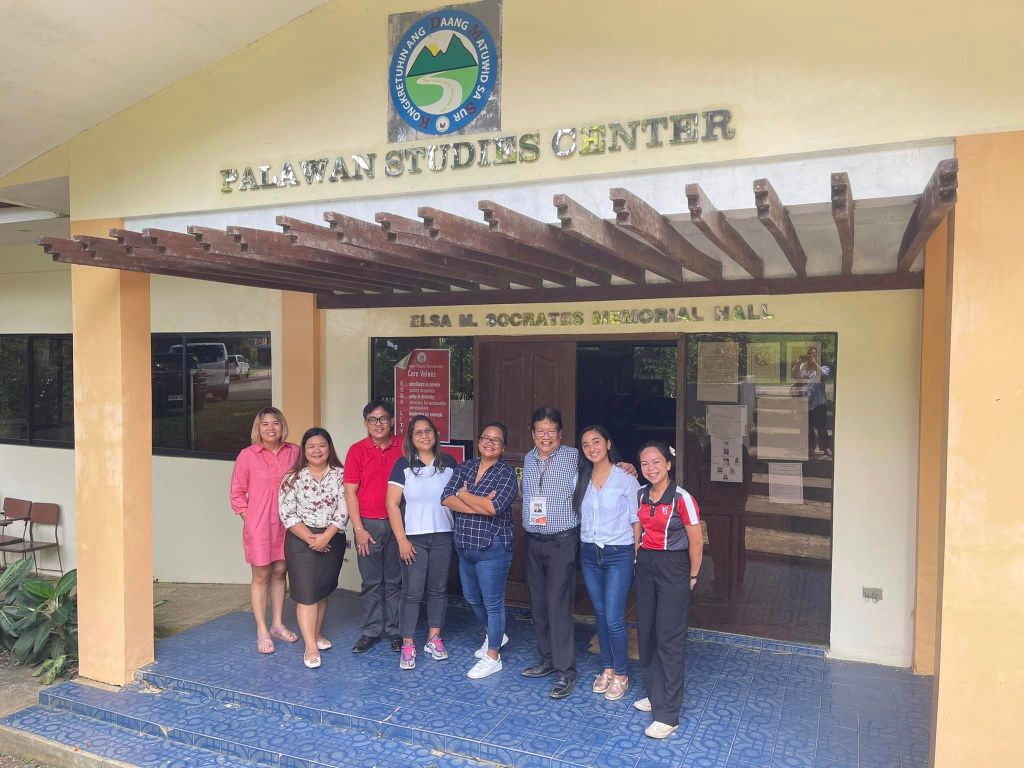
Today, we honored the legacy of Prof. Oscar Llorente Evangelista with the 1st Writers’ Workshop for the edited volume on Iwahig Socio-Cultural History. This collaboration is a follow through of the 2005 national conference convened by Prof Oca through the Philippine Historical Association which celebrated the history of Iwahig and Culion.
As I told him when I last saw him, “It took 18 years, Ninong. But here is our promise.” Majority of the contributors for this book were his students and there’s no better place to hold this event than in the Palawan Studies Center, another permanent reminder of his outstanding impact to Palawan society.
 Maria Carinnes P. Alejandria
Leave a comment